
How to Read Lata Night Chart Numbers Accurately – Complete Guide
Learn how to read Lata Night Chart numbers accurately. This complete guide explains single, jodi, patti formats, chart structure, common mistakes, and reading tips.
 TechRefinz
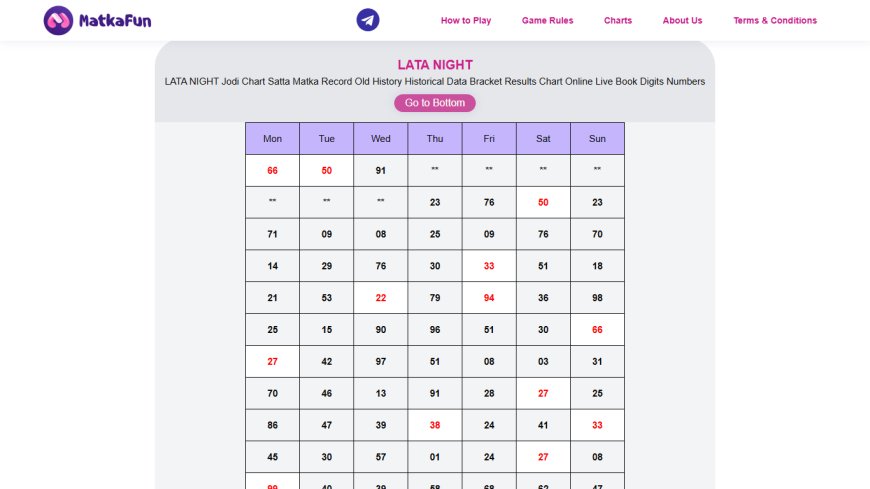
Reading the Lata Night Chart accurately is one of the most important skills for anyone who follows night results. For beginners, the chart may appear complex due to multiple number formats and date-wise records. However, once you understand the structure and the correct reading method, the chart becomes simple and logical.
This complete guide explains how to read Lata Night Chart numbers accurately, covering chart layout, number formats, step-by-step reading methods, and common mistakes to avoid.
What Is the Lata Night Chart?
The lata night chart is a daily updated record of night results, displayed in a structured chart format. Each day’s result is added to the chart so users can check:
-
The latest result
-
Past results
-
Number patterns over time
The chart usually includes single digits, jodi numbers, and patti (panel) numbers, all arranged date-wise.
Why Accurate Chart Reading Is Important
Accurate reading is essential because:
-
A small mistake can lead to misunderstanding results
-
Confusing old data with new data causes errors
-
Proper reading improves confidence and clarity
The chart is a reference tool, and its usefulness depends on how well it is read.
Understanding the Basic Structure of the Chart
Before reading numbers, you must understand the chart layout.
Common Chart Layout
Most Lata Night Charts include:
-
Date or Day Column – Shows when the result was declared
-
Single Digit Column – Displays one-digit result
-
Jodi Column – Shows two-digit combination
-
Patti (Panel) Column – Displays three-digit result
Each row represents one day’s result.
Key Number Formats Explained
Understanding number formats is the foundation of accurate reading.
Single Digit
-
A number between 0 and 9
-
Usually the easiest to identify
-
Often used as a reference point
Example: 3, 6, 9
Jodi Number
-
A two-digit combination
-
Digits range from 0 to 9
-
Order matters
Example: 24, 58, 90
Patti (Panel) Number
-
A three-digit number
-
May include repeated digits
-
Requires careful reading
Example: 123, 455, 789
Understanding these formats eliminates confusion.
Step-by-Step Guide to Reading Lata Night Chart Numbers
Step 1: Check the Latest Date
Always start by checking the date column. This ensures you are reading the correct and most recent result.
Many mistakes happen when users accidentally read older entries.
Step 2: Read the Single Digit First
Begin with the single digit:
-
Identify the number clearly
-
Avoid mixing it with jodi digits
-
Focus on the correct row
This sets the base for reading the rest of the result.
Step 3: Move to the Jodi Column
Next, read the jodi number:
-
Ensure you read both digits correctly
-
Do not reverse the digits
-
Confirm it matches the same row as the single digit
This step requires attention, as jodi reversal is a common mistake.
Step 4: Read the Patti (Panel) Carefully
Patti numbers need extra care:
-
Read all three digits slowly
-
Avoid skipping digits
-
Check digit order
Because patti numbers are longer, misreading is more common here.
Step 5: Cross-Check Once
After reading all formats:
-
Recheck the row
-
Confirm date alignment
-
Ensure numbers belong to the same day
Cross-checking improves accuracy.
Understanding Date-Wise Flow
Lata Night Chart numbers are arranged chronologically. This means:
-
Older results appear at the top
-
Newer results are added below (or vice versa, depending on layout)
Always follow the date order to avoid confusion.
Reading Old Results Correctly
Old results are useful but must be read carefully:
-
Confirm the date
-
Do not assume sequence without checking
-
Compare adjacent rows for context
Reading old results accurately helps understand chart continuity.
Common Mistakes While Reading Chart Numbers
Confusing Jodi and Patti
Beginners often mix two-digit and three-digit numbers. Always check the column heading.
Reading Numbers from the Wrong Row
Misaligned reading happens when users move horizontally instead of vertically.
Ignoring Update Time
Reading charts before they are updated can lead to missing data.
Reversing Digits
Digits like 23 and 32 are different. Always read carefully.
Tips to Improve Reading Accuracy
-
Read slowly and carefully
-
Follow the chart row-by-row
-
Use a finger or cursor to track rows
-
Practice daily
Accuracy improves with consistency.
How Chart Design Affects Reading
Good chart design includes:
-
Clear column headings
-
Proper spacing
-
Consistent formatting
Poorly designed charts increase reading errors, so always choose reliable sources.
Role of Past Data in Accurate Reading
Past data helps users:
-
Understand number formats better
-
Recognize chart flow
-
Avoid misinterpretation
The more charts you read, the easier accuracy becomes.
Difference Between Quick View and Detailed Reading
Quick view:
-
Just checks latest numbers
-
Higher chance of mistakes
Detailed reading:
-
Follows structure
-
Cross-checks data
-
Ensures accuracy
Beginners should always use detailed reading.
Maintaining Personal Notes for Accuracy
Keeping personal notes can help:
-
Reconfirm chart readings
-
Avoid forgetting numbers
-
Improve familiarity
Simple daily notes are enough.
How Beginners Can Build Confidence
Confidence comes from:
-
Understanding chart structure
-
Practicing reading daily
-
Avoiding assumptions
Over time, reading becomes natural.
Important Things to Remember
-
Charts show recorded data, not guarantees
-
Accuracy is more important than speed
-
Always verify date and row
-
Avoid rushing
Clear understanding prevents mistakes.